
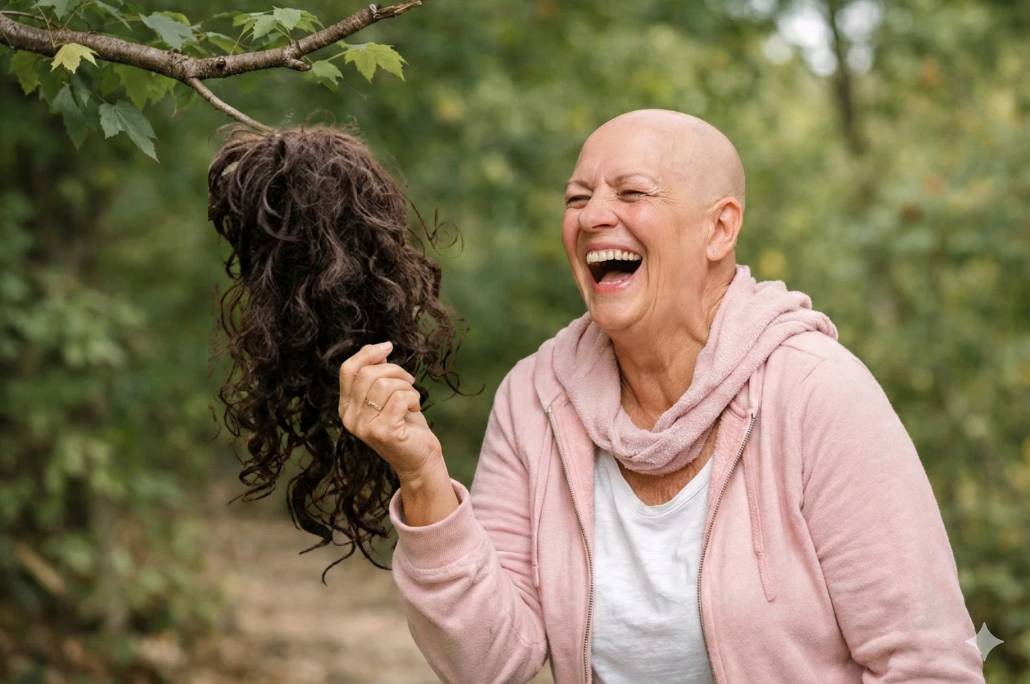
PERMISSION TO LAUGH: FINDING LIGHTNESS IN DARK TIMES
Written by Sonja Buckland — Feb 2026
There will be moments during treatment when something strikes you as absurdly funny. A nurse will say something unintentionally hilarious. Your body will do something ridiculous. A child will make an observation that breaks the tension completely. These moments are not trivial. They are medicine. Laughter does not diminish the seriousness of your situation, it provides respite. The capacity to find humor is not denial, it is resilience. Permission to laugh is permission to remain human.
When Serious Threatens to Eclipse Everything
The gravity of cancer can consume all available space. Conversations become clinical. Interactions become careful. Every moment carries weight. This is understandable, it is also unsustainable. Life is never entirely one thing. Even in the darkest seasons, light breaks through. You can hold both realities simultaneously, this is hard, and this moment is funny. Both are true. Neither negates the other.
The Humbling Absurdity of It All
Cancer strips dignity in ways both profound and mundane. You find yourself dependent on others for basic tasks. Your body behaves in ways that would have mortified you months ago. You can resist the humiliation and make it heavier, or you can acknowledge the absurdity and find humor in your own humanity.
One woman realized she was shaving only one leg and one armpit, having focused so intently on avoiding her surgical side. She laughed in the shower, and that laughter was self compassion. Another sat in a mammogram waiting room and quipped, I used to be a 36B, now I am a 36 long. These moments of levity are not disrespectful to the struggle. They are evidence of a spirit that refuses to be crushed.
Children as Teachers of Joy
Children normalize what adults make heavy. They see your surgical scar as an owie. They ask when Grammie will roughhouse again. They feel what they feel in the moment, then move on. Adults could learn from this. Children also say things that crack tension wide open. They announce your medical situation in technically accurate but hilariously phrased honesty. They sing made up songs about your recovery. They comfort in their own language. Let their lightness penetrate your heaviness. They are offering a gift.
The Comfort of Regression
During crisis, you may find yourself drawn to what soothed you in childhood, a soft blanket, a stuffed animal, a particular pillow. This is not childish, it is wise. Your nervous system is overwhelmed. It seeks softness, warmth, something to hold. These are not luxuries, they are needs.
One woman carried a small stuffed sheep everywhere during treatment. Another kept a small pillow given by a fellow survivor for eighteen months. These objects become tactile reminders that we are held, by love, by grace, by something larger than fear. There is no shame in needing this. Give yourself permission.
Surprising Sources of Levity
Humor arrives unexpectedly. A hospital aide comments enviously on your figure while you feel your worst. The irony becomes laughable. Even in crisis, someone else sees something to envy. If they see value, perhaps you can too.
Or you sit in a waiting room staring at smiling bald women on a poster and think, how can they smile. Months later, you realize you have become one of them. The shift from them to us to me carries moments of dark comedy embedded within it.
The Role of Personality
Some people throw parties in hospital rooms. Others need silence. Some crack jokes. Others cry. There is no correct way to move through this. Your personality does not disappear because you have cancer. Crisis often amplifies who you already are. Honor your needs and do not perform someone else’s version of coping.
Small Joys as Radical Acts
In treatment, small joys become profound. The taste of something delicious when most food tastes wrong. A good night’s sleep after weeks of insomnia. Hair beginning to grow back. These moments are evidence that life continues and that pleasure remains possible.
Acknowledging small joys does not minimize large pain. A good day does not erase the bad ones, but it proves they are not the only reality. This matters more than it might seem.
When Everything Feels Heavy
There will be days when nothing feels light and when laughter seems impossible. Honor those days. You do not need to force brightness. Feelings are not permanent. Today’s heaviness does not predict tomorrow’s lightness. Humor often surprises you. You cannot manufacture it, but you can remain open when it arrives.
Balance Between Seriousness and Lightness
This is not toxic positivity. You do not need to pretend everything is fine when it is not. This is about preserving your humanity and allowing moments of lightness to coexist with difficulty. Life is never all tragedy or all comedy. Cancer makes that more visible. The goal is not cheerfulness. The goal is presence, including, occasionally, laughter.
Humor as Connection
Shared laughter creates bonds. The nurse who makes you laugh becomes more than a professional. The friend who finds absurdity with you witnesses your full humanity. Laughter says, I am still here, I am still me. It is defiance and grace. It refuses to let cancer have the final word.
When you laugh, you give others permission to laugh. You release them from constant seriousness. Your laughter signals that they can be normal with you. This is generous. It lightens their load as well as your own.
What to Remember
Laughter is not frivolous, it is essential. Small joys are not distractions, they are sustenance. Moments of lightness do not dishonor gravity, they help you survive it. You do not need to be solemn to be taken seriously. You do not need to suffer constantly to prove your suffering is real.
Give yourself permission to laugh when laughter comes. To hold softness when softness is offered. To receive joy in whatever small doses it arrives. These are not luxuries. They are tools for survival. Survival with your spirit intact is the point.
.
 © Soul Anatomy Group 2026